Every child is still writing the story of who they are.
This is where two lives meet: teacher and mother. Curiosity replaces judgement as the way we meet the hardest kids in the room.
Prelude in C, BWV 846, Kevin MacLeod (incompetech.com), licensed under CC BY 4.0.
A child isn’t a finished person having their traits revealed to us. They’re still writing the story of who they are, and every adult around them is helping author it, whether they mean to or not.
A grown adult can read an unfair judgment, decide it’s wrong, and set it down. A child can’t do that yet. They’re still working out which parts of the story are even true. So what we see in a child, and show them we see, doesn’t just describe them. It writes them.
We’re not bystanders to the story. We’re co-authors of it, in every ordinary moment, whether we notice or not.
Alicia Martello
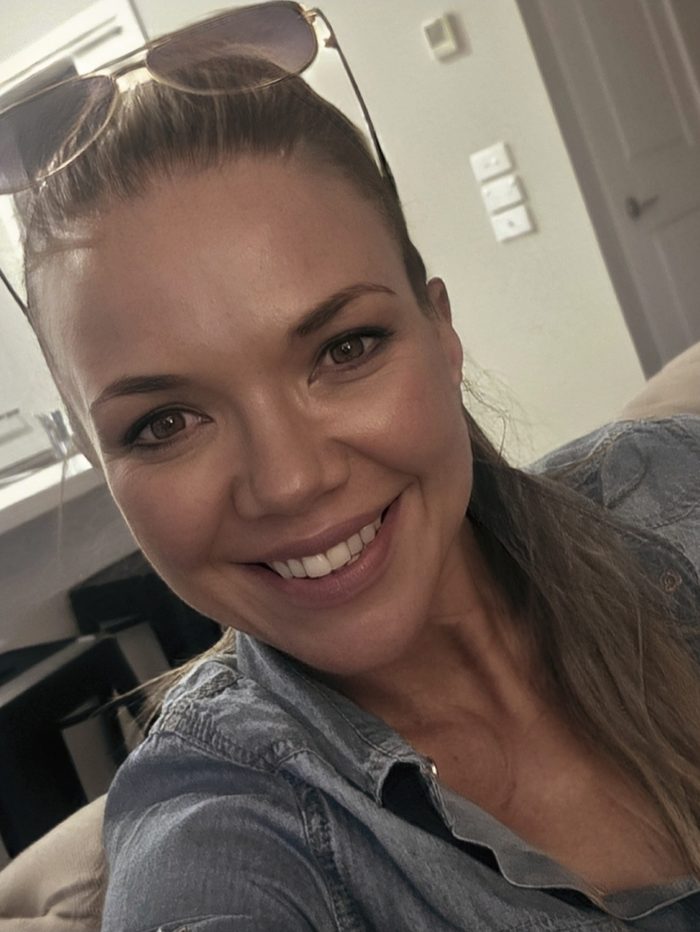
Two lives, one meeting place.
I’ve spent my working life in classrooms, paying close attention to children, especially the ones who don’t find school easy.
Before I qualified as a primary teacher, I worked as a teacher’s aide. That’s where everything changed. I came to know classrooms from the seat beside the child who was struggling, not from the front of the room.
I’ve since taught right across primary school, in classrooms full of children of every kind: the loud ones, the quiet ones, the ones who kept me awake at night.
I’m also the mother of Luke. He’s nonverbal and autistic, with complex and profound needs, and he has been, at different points in his life, the child nobody wanted in their classroom. He is also the bravest person I know.
This work comes from the meeting place of those two lives: teacher and mother. It isn’t theory, and it isn’t a program. It’s lived, imperfect, and built on the belief that every child deserves to feel like the apple of someone’s eye.
Wait. Notice. Keep it small. Mean it.
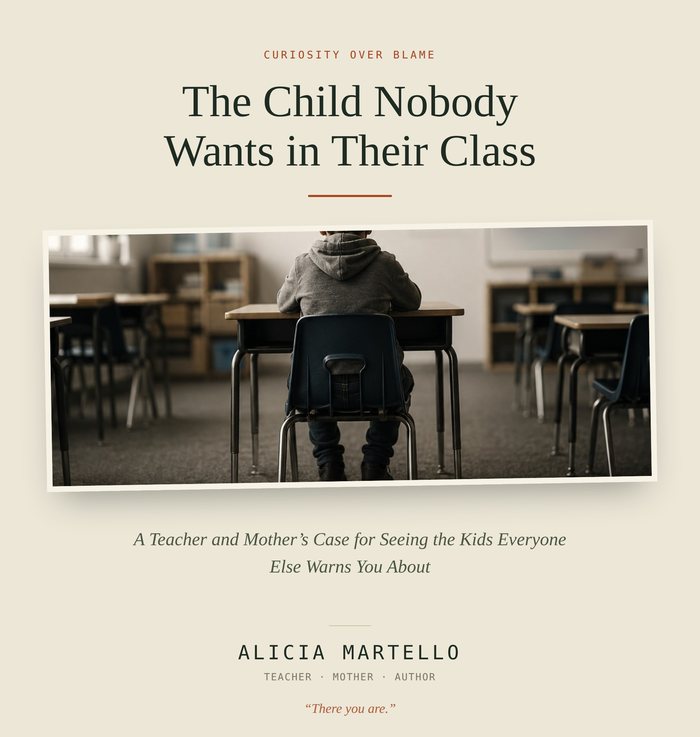 Concept cover, not final
The Child Nobody Wants in Their Class
Curiosity Over Blame: A Teacher and Mother’s Case for Seeing the Kids Everyone Else Warns You About
For the child who gets labelled too hard, too loud, too much, or simply exhausting. For the parents holding their breath at pick-up, wondering how the day really went. For the teachers who care deeply, who turn up every day with the best of intentions, even when they’re tired, stretched thin, and unsure what else to try.
At its heart, this book is for the children who are misunderstood, and the adults trying, imperfectly and with love, to do right by them.
Contents
- The Child Everyone Warns You About
- Too Much, Too Loud, Too Hard
- The Child Who Explodes
- The Child Who Shuts Down
- The Child Who Is Hard to Like
- Please Don’t Forget the Teacher
- The Space Between Intention and Impact
- Haven’t We Just Gone Soft?
- Who Holds the Line
- Changing the Question
- The Apple of My Eye
- Learning How Good It Feels to Do Well
- What We Choose to See
- Staying
Want to know the moment it finds a home? Get in touch and I’ll let you know.
We’re not bystanders to the story. We’re co-authors of it.
The session: Curiosity Over Blame
For schools ready to look beyond rewards, consequences and behaviour charts and ask a different question.
This isn’t another behaviour management program, and it doesn’t ask your staff to add one more thing to an already impossible day.
It’s a shift in how your team sees the hardest kids in the building, grounded in classroom research, and in what actually happens when a teacher changes the question from “what’s wrong with this child” to “what is this child trying to tell us.”
Right now, it’s offered as a session inside an existing staff meeting or twilight slot, no half-day or full-day commitment, no extra time carved out of an already full calendar. Built around real classroom moments, honest about what the research does and doesn’t prove, and nothing anyone has to memorise.
What staff leave with
- A different way of reading challenging behaviour, before reaching for a consequence.
- Language they can actually use in the moment, not a script to memorise.
- A way to respond without escalating, even on the hardest days.
- A shift from blame to curiosity, as a lens, not one more program.
Every teacher leaves with two things on paper: the Spark Map, for reading one child’s earliest signs, and Six Moves, specific ten-second responses they can use the same week.
Staff meeting session
45 to 60 minutes, dropped into an existing staff meeting. One clear shift in thinking your team can use the very next day.
Twilight session
A slightly longer after-school session for staff who want to sit with the ideas a little longer.
Leadership conversation
A focused conversation with your leadership team about how the school talks about, and holds, its hardest-to-reach students.
For school leaders: what this session is built on (PDF)
Say hello.
Whether you’re a school leader curious about PD, a teacher who wants to talk, or you’d simply like to know when the book finds its home. I’d love to hear from you.